Why Vexus Builds Its Own Trailers
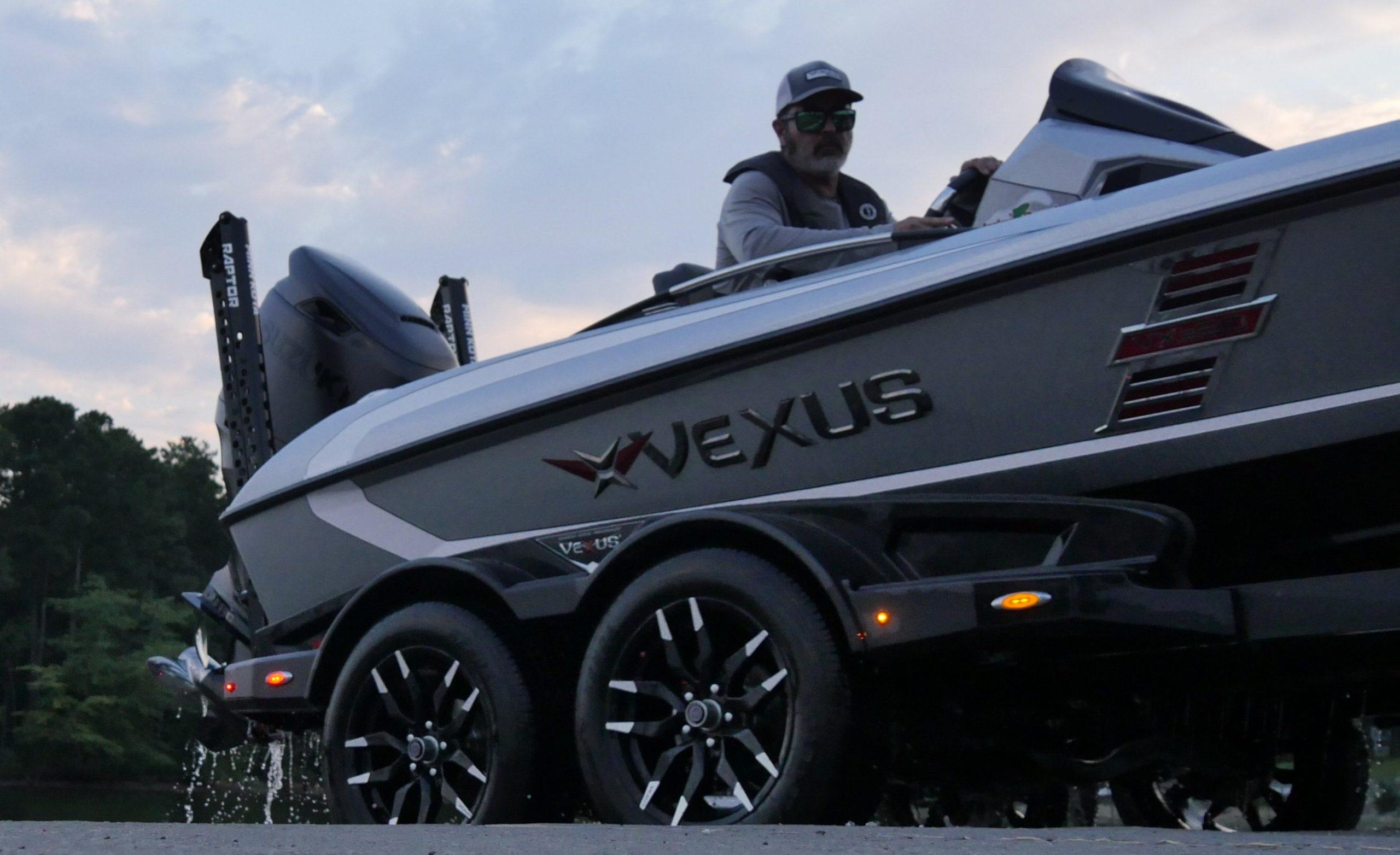
Alan McGuckin posted a short clip from the Vexus trailer shop in Flippin, Arkansas, and if you blinked you might have missed the part that matters. Vexus doesn’t outsource trailers. Ten or twelve skilled hands build them in that building, custom to each boat, and it all starts with C channel steel — water drains off it instead of getting trapped inside a tube and eating the frame from the inside out.
That’s about a minute of video. There’s a lot more underneath it.

Think about how you actually buy a boat. You agonize over layout, motor size, what electronics are going where, what the console looks like. Then a trailer shows up under it and you never think about it again until something goes wrong at 65 miles an hour on the interstate or the ramp is packed on a Saturday morning. The trailer is the piece carrying everything else you just spent your money on, and Vexus treats it that way.
Start with the coating. Every square inch of that channel frame gets a UV-stable polyurea. Poly on a trailer isn’t news anymore — Vexus put the idea to work back around 2005 and patented it at the time, and plenty of builders spray something now. Two things still separate them. Some are laying poly over a tube frame, which means it’s rusting from the inside no matter how good the outside looks. Others are using a cheaper poly with no UV inhibitors, and you’ll watch it fade. Polyurea is a strong industrial coating on its own. The UV package is the part doing the long-term work.
Now look at a Vexus trailer with no boat sitting on it, which most people never do. The crossmembers are forged. Not cut apart and welded back together to fit the hull, which is where a lot of trailers go wrong … once you cut a crossmember and weld it, you’ve introduced a weak point and you’re trusting somebody’s bead. Vexus forges the piece to shape and skips that conversation entirely. The stanchions holding the bunks swivel, and the bunks are 2×6 across the board, which is what lets them span the hull and hold up at highway speed.
That bunk layout isn’t guesswork either. Each trailer is laid out so the hull nests down into the bunks with the load carried on the center bunks and less of it hanging on the outsides. The only way to hit that number is to build your own crossmembers and your own upright brackets. A trailer thrown together out of clamps and U-bolts can be adjusted. It can’t be custom fit. There’s a difference and your gelcoat knows it.
The brakes are where the ownership experience really shows up. State law requires brakes on a lot of these trailers, and Vexus goes past that — a disc brake on EVERY tire on the ground, not one braked axle and one along for the ride. Better still is the single bleed system. A banjo fitting jumps caliper to caliper, so when you service it you open one bleeder valve and purge the whole thing from one spot. Nobody asks about that at the dealership. Everybody appreciates it three years later, laying on the concrete in their driveway. Hybrid oil hubs are standard for the same reason: the alternatives either want too much maintenance or don’t hold up.
Aluminum wheels are standard, with MTI color options on the larger-diameter wheel for the fiberglass trailers. On the fiberglass models the fender is fiberglass too, infused right alongside the hull, deck and stringer system. On the aluminum boats the fenders get built in the main plant next to the boat they’ll ride under. It sounds like a cosmetic detail until your co-angler puts a hand on it sliding down the side of your hull and it feels like part of the rig instead of a stainless steel afterthought. Steps are integrated into them.
The spare tire is a small thing that tells you somebody towed a boat before designing this. There’s a spare on everything, and it nests up in the tongue rather than hanging off the side. Two reasons. It takes the road debris that would otherwise be sandblasting your hull, and it keeps your sight line open to the clearance light on the shoulder side. Pull over on a rainy night on a two-lane and you’ll understand why that matters.
Steps can be ordered with the trailer and bolted on at the factory, or added later. If you’ve ever put running boards on a pickup you know how that goes — you spend a year wondering why you waited. The ADX and DVX get a pivoting step that centers up for sharp turns and swings back out for boat access at the ramp.
Every trailer gets a swing tongue. Standard, not an upcharge, and it exists for the guy who measures his garage after the fact and comes up eight inches short. Adjustable winch stands on some AVX models do the same job from the other direction, letting the package fit the space you actually have instead of the space you wish you had.
Then there’s the wiring, which is the single most frustrating thing about owning any trailer, boat or utility. All the lights are LED. The harness runs inside galvanized conduit so it isn’t sitting out there corroding. The connectors are molded and watertight, and there isn’t a Scotch lock on the thing. It all marries to your truck through a coiled seven-way that stretches to reach whatever bumper and hitch setup you’re running.
None of this is the stuff that sells a boat on the showroom floor. It’s the stuff that decides whether you’re fishing on Saturday or sitting on the shoulder.