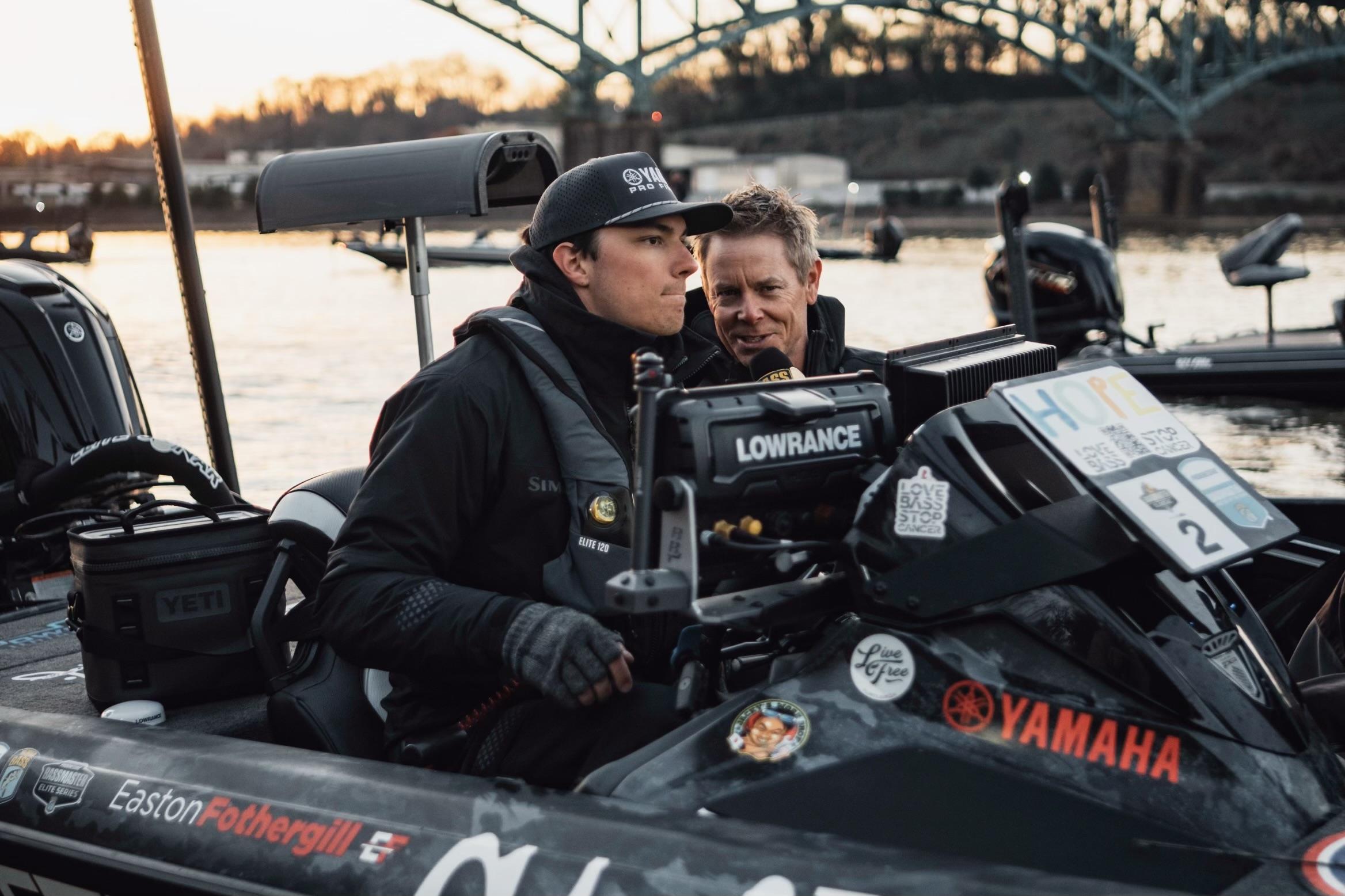
FOTHERGILL WANTS HIS NEXT WIN TO BE THE OLD-FASHIONED WAY
By Walker Smith, Courtesy of Dynamic Sponsorships
At a very young age, Toyota Bonus Bucks pro Easton Fothergill has already accomplished what most professional anglers spend an entire career chasing. The Minnesota native burst onto the national scene with a dominant collegiate career before capturing the coveted 2025 Bassmaster Classic title. Since then, he’s proven he belongs among the sport’s biggest names, collecting impressive finishes while showcasing the confidence and composure that have quickly become his trademark.
Like many anglers of his generation, Fothergill has become exceptionally skilled with forward-facing sonar. The technology has undoubtedly played a role in his success, allowing him to maximize opportunities offshore and compete with the best anglers in the world. But if you ask Fothergill what he’s thinking about as the Bassmaster Elite Series heads to Lake Champlain, it isn’t electronics. It’s legacy.

Elite Series anglers will compete without forward-facing sonar, creating a playing field built on instinct, experience and decision-making.
“I’ve won some events at the highest level with forward-facing sonar but now, I really want to win one traditionally because I know I have what it takes,” Fothergill said. “This season so far has been up and down for me.”
It’s a refreshingly honest perspective from one of professional bass fishing’s brightest young stars.
The debate surrounding forward-facing sonar has dominated conversations throughout the sport over the last several years. Some view it as an incredible advancement while others long for a return to a more traditional style of competition. Fothergill has never shied away from embracing new technology, but he also understands that great anglers were catching giant bass long before live sonar ever existed. That’s why this tournament carries a different kind of significance.
“I grew up fishing without forward-facing sonar, so I absolutely know I can catch ’em without it.”
There’s conviction behind those words. Long before he became one of the Elite Series’ youngest winners, Fothergill spent countless hours learning to read shorelines, identify seasonal patterns and understand how bass relate to changing conditions. Those foundational skills don’t disappear because new technology arrives. If anything, they’re about to become more important than ever. Lake Champlain has always rewarded anglers who can think on their feet.
Stretching across New York and Vermont, the sprawling fishery offers virtually endless opportunities. Vast grass flats produce quality largemouth while expansive rock shoals and offshore structure hold some of the finest smallmouth populations anywhere in the country. Success often comes down to choosing the right species, or knowing when to chase both. Fothergill believes versatility will ultimately decide this tournament.
“It could be won on all largemouth but that would be very hard, in my opinion,” he said. “The quality it takes to win up there makes smallmouth the popular choice to target. But when it’s all said and done, I think it will be a mixed bag that ends up winning.”
That prediction reflects a level of maturity that’s remarkable for an angler so early in his professional career. Young anglers are often stereotyped as relying heavily on technology or committing too strongly to one approach. Fothergill has shown the opposite. He understands tournaments are rarely won by forcing one pattern. Instead, they’re won by recognizing changing conditions and making smart adjustments throughout the day.
That philosophy has become one of the biggest lessons he’s taken away from this Elite Series season. Professional fishing has a way of exposing every weakness, especially the mental ones. Over the course of a long season, every angler experiences momentum swings. One missed fish can change a tournament. One poor decision can derail months of preparation. The best competitors learn how to move on quickly instead of dwelling on mistakes. For Fothergill, that’s become a major point of emphasis.
“The biggest lesson I’ve learned this season revolves around mental preparation,” he explained. “When I fish a tournament now, I put as many baits in as many high-percentage places as I possibly can.”
It’s a deceptively simple approach. Rather than becoming overly attached to one lure, one area or one pattern, Fothergill focuses on maximizing every opportunity. Every cast is made with purpose. It’s less about chasing perfection and more about consistently making high-percentage decisions over the course of four long tournament days.
That’s the kind of mindset that often separates good anglers from great ones. It also explains why Fothergill has climbed so quickly through the professional ranks.
His success hasn’t been built solely on technology. It’s been built on preparation, confidence and an eagerness to learn from every tournament. Now, as Champlain approaches, he admits there’s a little more riding on this event than usual.
“Going into Champlain, I have high hopes and a little extra motivation.”
That motivation isn’t rooted in proving that forward-facing sonar doesn’t matter, or about validating or invalidating anyone else’s opinion. Instead, it’s about checking off another personal milestone. Every Elite Series competitor develops goals that only they truly understand. Championships matter. Trophies matter. But so do the victories that answer questions you’ve been asking yourself.
For Fothergill, winning an Elite Series event without forward-facing sonar would be one of those moments.
It would validate the confidence he built years before live sonar became commonplace. It would reinforce the fundamentals that carried him from Minnesota’s lakes to college fishing, then onto bass fishing’s biggest stage. Most importantly, it would remind him that while technology may evolve, the heart of competitive bass fishing remains unchanged.
Whether Easton Fothergill leaves Lake Champlain holding the trophy or simply another valuable lesson, one thing is certain. His remarkable rise through professional bass fishing is only beginning. If his career so far is any indication, there are plenty more wins ahead whether they’re earned by watching a screen or by trusting the instincts that first made him believe he belonged among the best in the world.