Clear Water, Dirty Secrets: Mark Daniels Jr. Eyes Largemouth Edge at Lake Hartwell
By Walker Smith, Courtesy of Dynamic Sponsorships / Photo: MLF
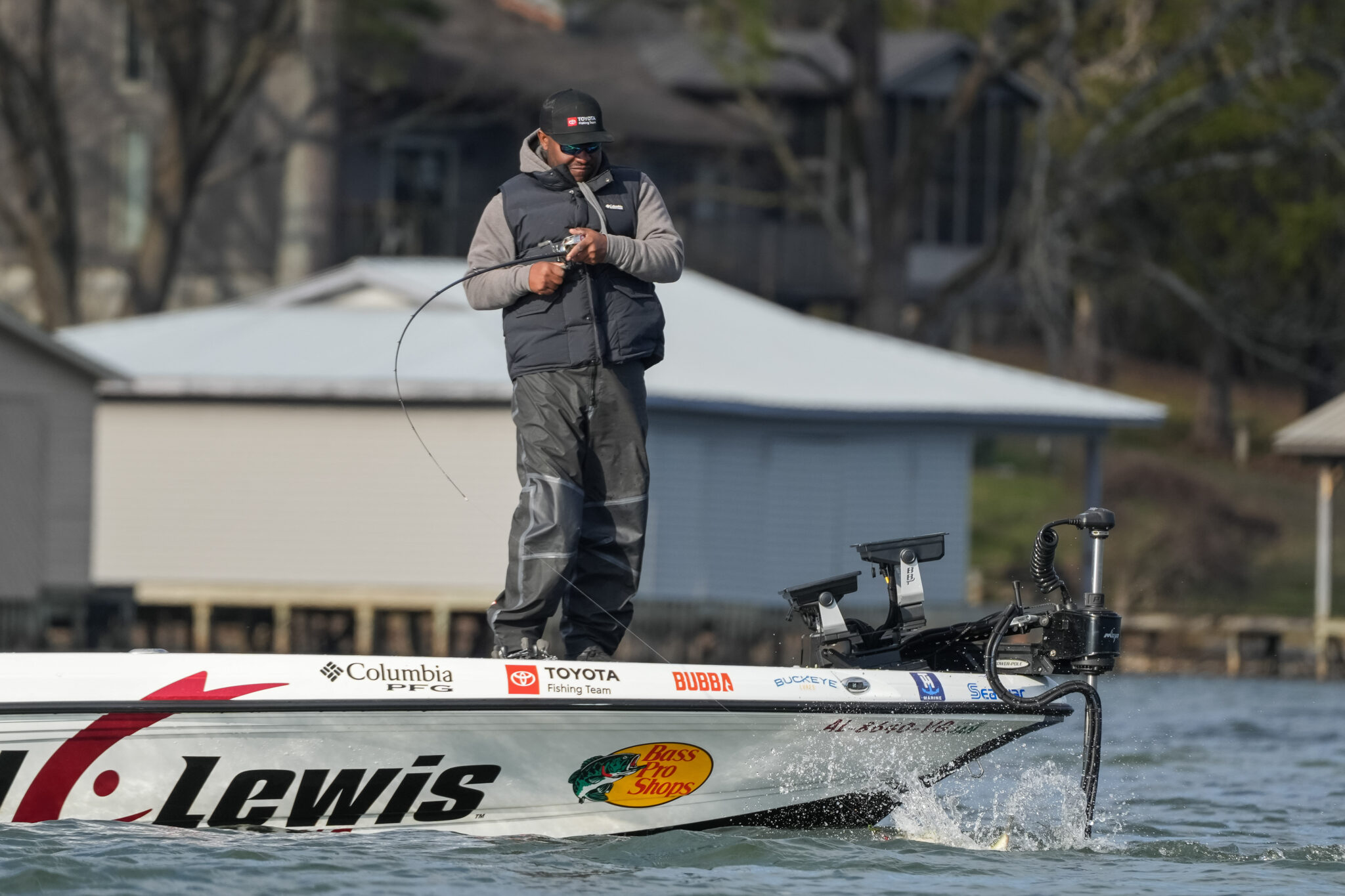
The red clay banks of Lake Hartwell glow a little different in late winter, when the mornings break cold and gray and the promise of spring rides low across the water. This popular South Carolina reservoir can make a bass fisherman feel equal parts hopeful and humbled. Right now, Team Toyota pro Mark Daniels Jr. admits he’s feeling a touch of both.

With Stage Two of the Major League Fishing Bass Pro Tour set to kick off on Hartwell, Daniels has spent long practice days idling over clear-water points, scanning timber-lined pockets and easing up into stained river runs in search of the right mix. What he’s found so far has tested both his patience and perspective.
“I’m not going to lie,” Daniels Jr. said. “It’s been a tough practice. It has been really heavy on the spotted bass which are fun to catch but they just don’t weigh much in most situations. There are still some big spotted bass to be had on this lake, but I think a good largemouth is going to be very important in this tournament.”
Hartwell has a healthy population of spotted bass, fish that roam the main lake and suspend over timber in the clear, blue-green water. They often bite willingly, especially when anglers can see them with modern electronics. But in a format where ounces matter, Daniels believes the green-backed largemouth may tell the story before it’s all said and done.
“The main lake has really clear water,” he said. “That seems to be where the spots hang out. But if you go up some of the rivers and into the off-colored water, that’s where you might run into big largemouth. I know they’re in here and I think that dirty water is where you’re likely to find them.”
It’s a tale as old as Southern impoundments, clear water for the roamers, stained water for the ambushers. The upper reaches of Hartwell’s rivers offer that subtle color change that can position a better-than-average bite. Daniels Jr. has spent part of practice pushing into those areas, watching his electronics closely but also keeping an eye on the shoreline for the telltale signs of prespawn movement.
Water temperatures have hovered in a range that puts the fish squarely on the cusp of change.
“Water temperatures are 49 in the mornings and top out at about 55 degrees,” MDJ said. “The fish are staging for sure. I think we’ll also see some big fish caught out of laydowns leading into spawning areas. I think a vibrating jig and flat-sided crankbaits are going to become a player as well.”
In that 49- to 55-degree window, bass often group up near the first available cover outside spawning flats. Secondary points, brushpiles, dock walkways and fallen trees that stretch a little farther into the channel. It’s a time when reaction baits can shine, particularly in water with a touch of stain. A flat-sided crankbait can hunt tight along rock and wood, while a vibrating jig can trigger a reflex strike from fish that are feeding up before the spawn.
But for all the talk of staging fish and shallow targets, Daniels knows this event will likely be defined by what’s happening offshore and by the glowing screens mounted on the bows of nearly every boat in the field.
“This is definitely going to be a forward-facing sonar event,” he said. “It will be dominated by that. You’re going to have to do well in your forward-facing sonar period. There is absolutely no doubt about that.”
FFS has reshaped competitive bass fishing in recent years, allowing anglers to see individual fish in real time and present baits with surgical precision. On a lake like Hartwell where spotted bass suspend over timber and roam open water, the technology can turn a vast expanse into a series of calculated opportunities.
Daniels, like most of the sport’s top pros, has embraced the tools while recognizing their impact.
“When the field is not using forward-facing sonar, I would suspect most of us are going to be fishing boat docks,” he said.
Boat docks line much of Hartwell’s shoreline, offering shade, vertical cover and under the right conditions, a reliable bite. Skipping a jig or soft plastic under cables and floats has long been a staple here. In a tournament where periods restrict FFS, versatility will matter.
MDJ’s approach appears to be shaping into a two-pronged strategy: capitalize on offshore spotted bass with forward-facing sonar when allowed and hunt for quality largemouth in stained water and around visible cover when it’s not.
The challenge lies in balancing numbers with size. There’s also the mental grind. Tough practices can seed doubt, but they can just as easily sharpen focus. Daniels Jr. has weathered enough tour-level events to understand that what happens in practice doesn’t always mirror what unfolds once competition begins.
On Hartwell, conditions can shift quickly. A warm rain can stain the rivers overnight. A cold front can reposition suspended fish or tighten their strike window. The angler who reads not only his electronics but also the wind, the light and the subtle changes in watercolor will likely separate from the pack.
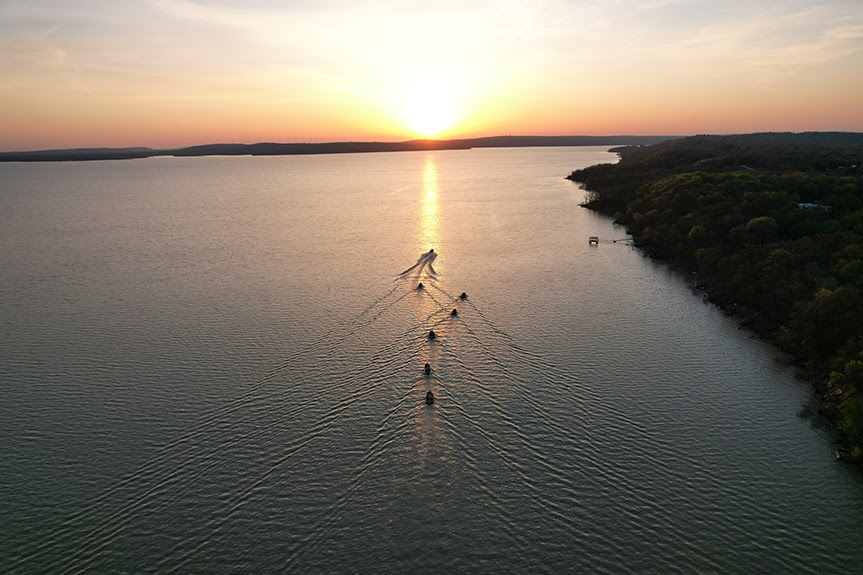
For now, though, it’s still practice. The sun dips low over Hartwell’s long points and MDJ idles back to the ramp, replaying the day in his mind. The arcs that followed but didn’t commit, the laydowns that felt right but didn’t produce, the one or two better bites that hint at possibility.
In the sultry stillness of a Southern evening, hope lingers just above the water’s surface. And for Mark Daniels Jr., that hope is enough. The fish are staging. The docks are waiting. The screens will glow.
And somewhere in that off-colored river water, he believes, a big largemouth is holding tight and ready to tip the scales when it matters most.