Iaconelli’s Insights after 30 years of Fishing Lake Guntersville
Courtesy of Dynamic Sponsorships
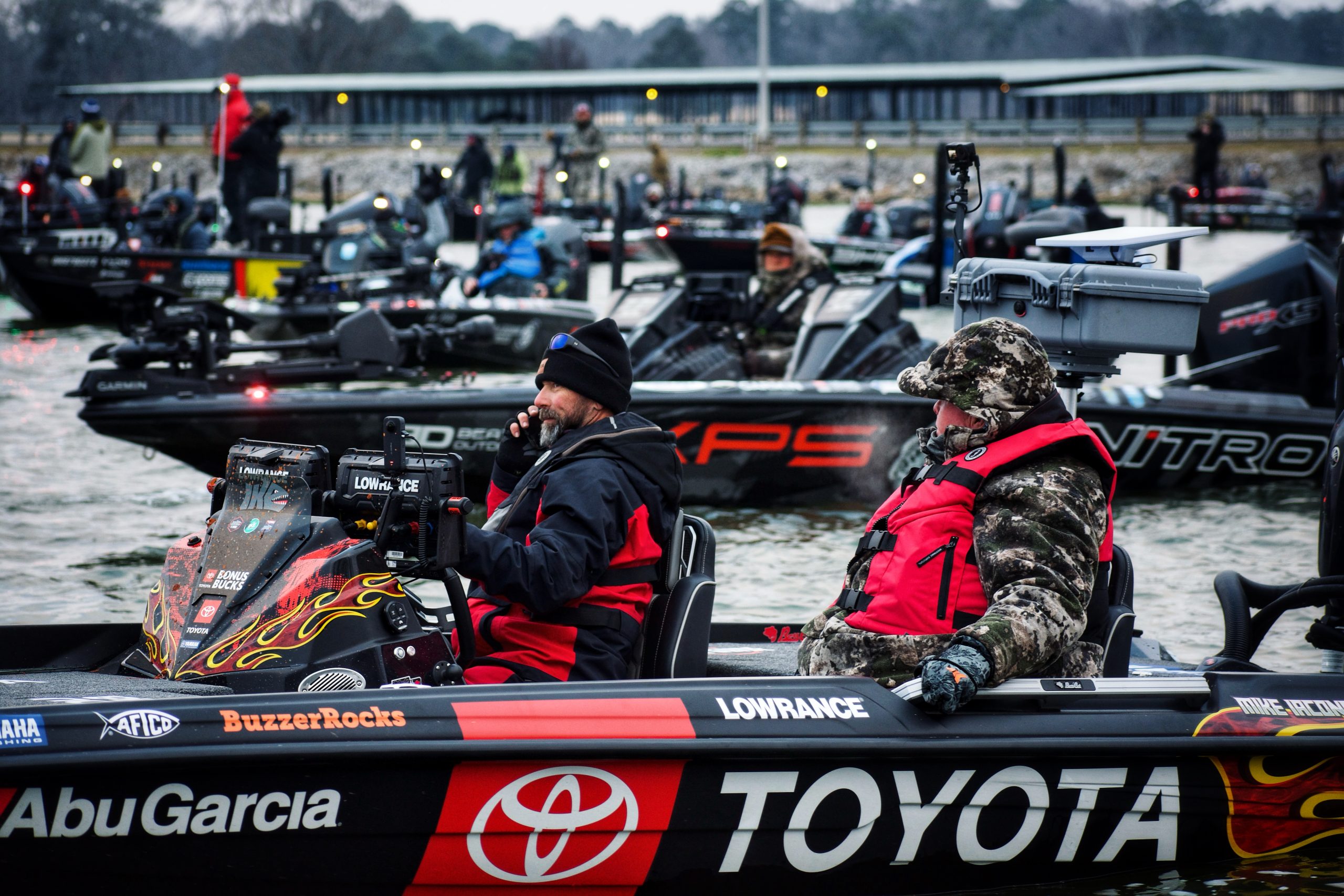
Mike Iaconelli began the final Elite Series season of his iconic career this morning along with 100 of his peers on Lake Guntersville to kick off the 2026 Bassmaster campaign. It’s fitting for the first stop of Ike’s swan song to take place on Guntersville, a legendary fishery by any measure. If lakes could be voted into the Hall of Fame, Guntersville would be on the first ballot, much like Iaconelli who was inducted into the Bass Fishing Hall of Fame in 2023.
The 31-year tournament veteran has a unique perspective on Guntersville, as he has competed on this body of water over the span of three decades. Longer than many of his Elite Series competitors have been alive. While tournament bass fishing has seemingly moved in the direction of a young man’s game in recent years, there is no way to replace or replicate experience.

Iaconelli has always had an incredible mind for not just bass fishing, but general wildlife biology. Many fans are familiar with one of his signature phrases of, “fish the moment” which really comes from understanding and predicting the seasonal and daily movements of both bass and baitfish as they go about their aquatic lives. The Team Toyota pro has proven to be one of the best in the world at fishing the moment over the duration of his time fishing at the highest level.
This morning, Iaconelli offered some of his hard-earned knowledge and a few insights on Lake Guntersville just minutes before firing up his Yamaha SHO in search of a strong start to his season.
Q – You’ve competed on this fishery over a span of three decades – what is the most notable difference and the biggest similarity between Guntersville today and 30 years ago?
Iaconelli – “The biggest difference to me is the amount of grass. Grass was always important here, but it used to be about finding key patches of milfoil or hydrilla. Now you cannot go anywhere on Guntersville, I’m talking from dam to dam, without seeing massive beds of eelgrass and other aquatic vegetation. Which makes the fishing better and more confusing, all at the same time!”
“The biggest similarity is the size of the fish. It’s always taken big ones to do well here whether we are talking 2006 when I won an Elite Series tournament in April, or February of 2026. There has always been a massive amount of bait here, which keeps the dinner table full for these bass. Even though Guntersville receives a ton of pressure, the bait coupled with the grass allow this fishery to keep pumping out big ones.”
Q – What kind of weight, per day, will it take to make Sunday’s top 10 cut?
Iaconelli – “It will take over 20-pounds per day to make the final day in my opinion. No doubt about it. In fact, you’re probably going to need 21-to-23-pounds per day to secure a Sunday spot.”
Q – You’ve seen it all throughout your 31-year career, but this years’ hybrid forward facing sonar format is a first for you… how do you feel about it?
Iaconelli – “I like it! I think it is a great compromise to the changing world of fishing. There are a lot of fans and competitors who prefer the old way, then there is another group of fans and competitors that love the new way of fishing. And as we’ve seen the past few seasons, both are very vocal about it. I think this will be a good blend.
“I’m so happy they (B.A.S.S.) went to this in my last season. I’m glad I get to experience this before my days as a full-time tournament pro are done.”
Q – You have been known to excel in cold water scenarios and early spring (late winter) tournaments throughout your illustrious career – what is one key tip you’d give to someone who wants to catch bass in frigid conditions?
Iaconelli – “Regardless of where you are in the country, the transition from winter to spring means the bass will be pre-spawn. Down here in Alabama that’s February, but back home that might be late March, April, or even May. When the season is changing, the bass will be transitioning, too. Because of that, I don’t care where you go, you should always be looking for those transition areas. Which to me, basically means the last little bit of deep water that leads to where those bass are going to want to spawn. Find that and you’ll find bass.”
“On Guntersville I’m looking for ‘touch points’, where the last little bit of deep-water touches something like a point, the side of a flat, a hump or some kind of structure those fish will stage near. Another thing I’m keying on this week is ditches. But not massive, deep ditches like many people imagine. I’m talking 8-to-14-inch ditches in a pocket that these fish will use like highways to get to where they want to be.”